Why cockroaches are a health risk:
Cockroaches carry bacteria including Salmonella and E. coli, spreading them across food prep surfaces. Their shed skins and droppings are a leading trigger of indoor asthma, particularly in children. This isn’t just an annoyance — it’s a public health issue.
The most effective roach control method: Gel bait. Professional pest control operators have used this approach for decades, and it’s now available to homeowners. Apply tiny dots of gel bait in cracks and crevices — behind the refrigerator, under the stove, inside cabinet hinges, and around plumbing entry points. Cockroaches are attracted to the bait, ingest it, and die within 24–72 hours. Surviving roaches often eat the dead, spreading the effect through the population.
Boric acid dusting: Apply a very thin, barely visible layer of boric acid powder in areas cockroaches frequent. Boric acid sticks to their legs and bodies and is ingested during grooming. It’s highly effective but must be applied in dry areas — moisture renders it useless.
Keep away from children and pets.
IGRs (Insect Growth Regulators): These products don’t kill cockroaches directly but disrupt their reproductive cycle, preventing nymphs from developing into breeding adults. Used alongside bait, IGRs can collapse a population over 4–8 weeks.
Common mistakes:
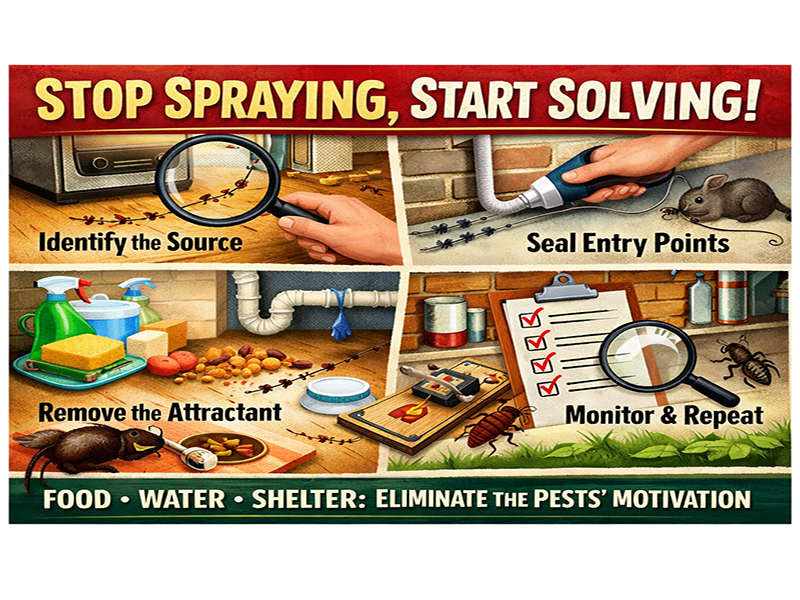
Using aerosol sprays, which scatter roaches into wall voids and make the problem harder to treat.
Leaving pet food out overnight.
Not treating behind and beneath large appliances, which are the primary harborage zones. A clean kitchen is your first line of defense. A cockroach seen during the day often indicates an overcrowded population — meaning the infestation is likely larger than it appears.