Understanding ant biology: Ants live in colonies of hundreds to millions. When you see a line of ants, those are workers scouting and returning food to the queen. The queen is the only one that can reproduce — killing worker ants without reaching the queen is like cutting grass without pulling the roots.
What attracts ants indoors?
Sweet foods, grease, pet food left out
Moisture (leaky pipes, standing water in sinks)
Warm shelter during temperature changes Step-by-step elimination:
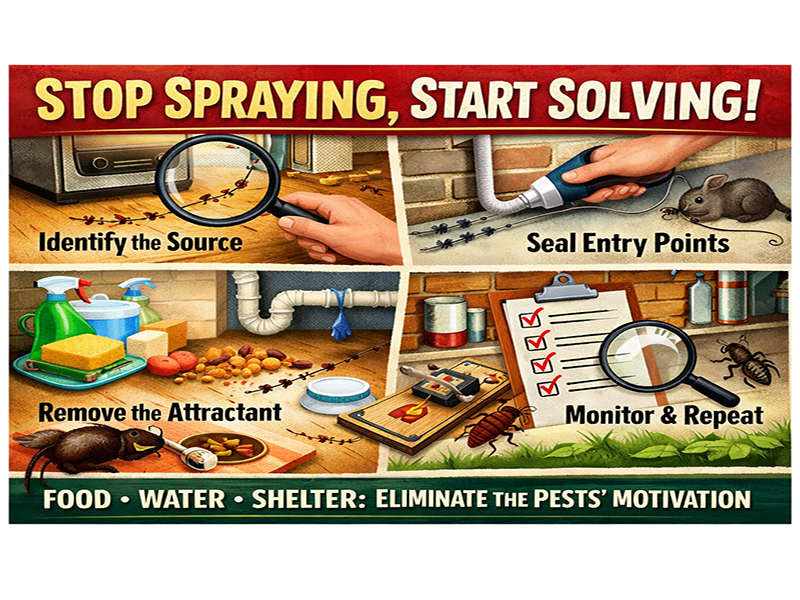
1. Clean thoroughly. Wipe down all counters, mop floors, and eliminate any crumbs or spills. Pay special attention to the stove, under the refrigerator, and behind the trash can.
2. Use slow-acting bait, not spray. Ant bait contains a delayed poison mixed with a food attractant. Workers carry it back to the colony and share it with the queen. This kills the source — not just the scouts you can see. Place bait stations near trails but not directly on them (this disrupts the foraging behavior).
3. Create a natural barrier. Diatomaceous earth (food-grade) sprinkled at entry points physically damages the exoskeleton of ants, dehydrating them. It’s non-toxic to pets and humans. Other effective barriers include chalk (calcium carbonate disrupts their scent trails), peppermint essential oil diluted in water, and vinegar spray (disrupts pheromone trails temporarily).
4. Seal entry points. Caulk any cracks around windows, baseboards, and where pipes enter walls.
5. Outdoors: Apply a granular or liquid perimeter treatment around the foundation. Keep mulch, firewood, and vegetation at least 12 inches from the house, as these provide harborage and moisture. When to call a pro: If you’ve had recurring infestations despite these steps, you may be dealing with carpenter ants (which nest in wood and can cause structural damage) or a colony established inside a wall void — both require professional treatment.